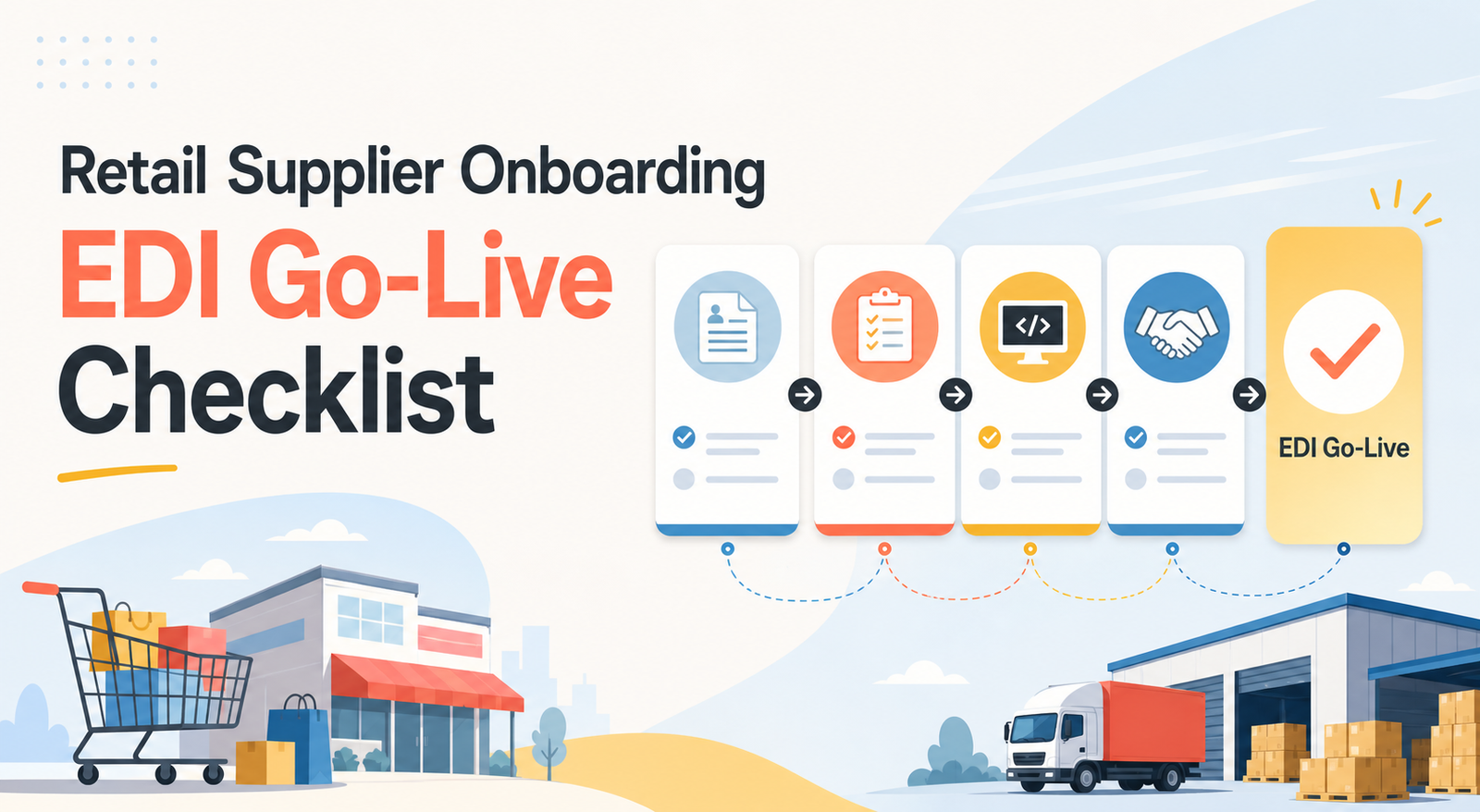
Retail Supplier Onboarding Checklist for Faster EDI Go-Lives
- DataSync
- 31 Aug, 2026
- 03 Mins read
- Edi
Retail supplier onboarding often slows down because teams jump into mapping and testing before the basics are fully aligned. Missing IDs, unclear document scope, weak validation, and late testing decisions can turn a simple setup into a delayed EDI go-live.
If your goal is faster onboarding, a clear checklist helps reduce avoidable back-and-forth and keeps suppliers moving through the process with fewer surprises.
1. Confirm Which EDI Documents Are In Scope
Start by defining the exact transaction set requirements for the supplier.
In retail onboarding, that often includes documents such as:
- EDI 850 for purchase orders
- EDI 855 for order acknowledgments
- EDI 856 for advance ship notices
- EDI 810 for invoices
Some programs may also require routing guides, label compliance, or retailer-specific data rules. If scope is unclear at the start, go-live dates usually slip later.
2. Gather Partner Setup Details Early
One of the biggest onboarding delays happens before testing even starts.
Teams should collect the supplier’s core setup details up front, including:
- Business and technical contacts
- Sender and receiver IDs
- Communication method such as AS2, SFTP, or API
- Required certificates or endpoint details
- Testing and production connection information
When this information is gathered late, even completed maps can sit idle while teams chase basic configuration data.
3. Validate Retailer Requirements, Not Just EDI Syntax
A file can be structurally valid and still fail retailer onboarding.
Retail EDI programs usually include partner-specific expectations around item numbers, ship-from locations, pack structures, routing details, or timing rules. That means supplier onboarding should validate both EDI format and business-rule compliance.
This is one of the most important checklist items for preventing rejected ASNs, invoice disputes, and receiving delays after go-live.
4. Agree on the Testing Path Before Execution
Many supplier onboarding projects lose time because testing expectations are not defined clearly.
Before execution begins, teams should align on:
- Which test cases are required
- What success looks like
- Whether acknowledgments must be reviewed
- Who signs off on each test stage
- How exceptions will be reported and corrected
Clear testing rules reduce confusion and help suppliers move from setup to certification faster.
5. Check Operational Readiness Around the Data
Faster EDI go-lives depend on more than just a successful connection.
The supplier should be operationally ready to send accurate production data at the right time and in the right sequence. For example, sending an 856 ASN too late, sending an 810 invoice with mismatched references, or failing to acknowledge an 850 purchase order can create immediate problems after launch.
That is why onboarding should confirm process readiness, not only technical readiness.
6. Define Error Handling and Support Ownership
Even well-tested retail EDI setups can hit production issues.
Before go-live, teams should know:
- Who monitors failures
- Who contacts the supplier
- How rejected documents are escalated
- What the expected response times are
- Which issues block shipment or invoicing
Without that ownership, small onboarding issues can turn into live operational disruption.
7. Use a Final Go-Live Checklist
The fastest teams do not rely on memory before production launch.
A final checklist should confirm:
- Required documents are tested
- Partner IDs are correct
- Production endpoints are active
- Certificates or credentials are valid
- Monitoring is enabled
- Support contacts are confirmed
This simple final review helps avoid preventable day-one failures.
Final Takeaway
A strong retail supplier onboarding checklist helps teams reach faster EDI go-lives by removing ambiguity from setup, testing, validation, and launch readiness.
If you want suppliers to go live faster, focus on document scope, partner configuration, retailer-specific validation, operational readiness, and clear support ownership. That is usually where the biggest onboarding delays can be reduced.
Our Team Members