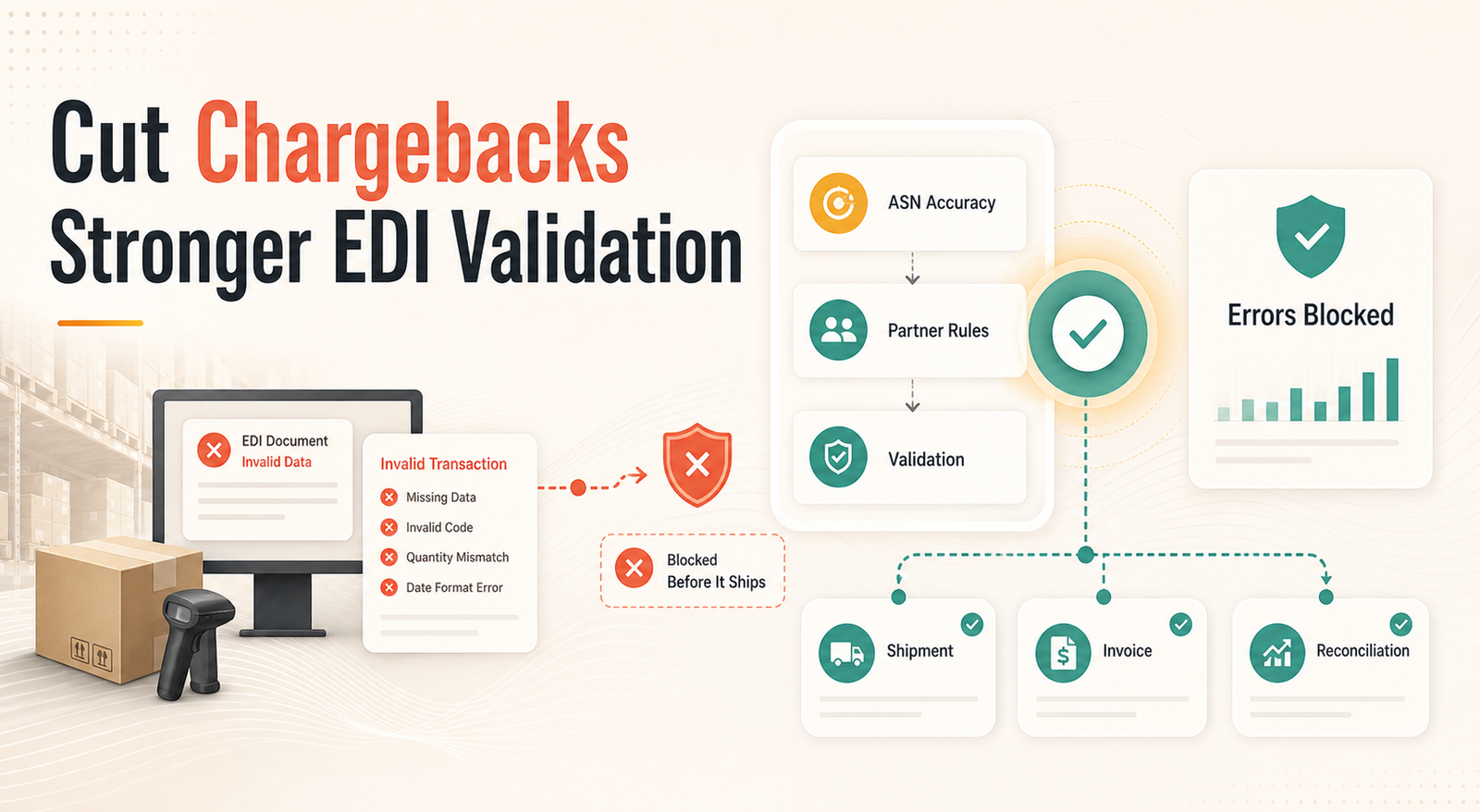
How to Cut Chargebacks with Stronger EDI Validation
- DataSync
- 25 Aug, 2026
- 02 Mins read
- Edi
Chargebacks often look like a finance problem, but many of them begin much earlier in the transaction flow. Weak EDI validation can allow bad data, missing fields, or incorrect document structure to move downstream until the business gets penalized by a retailer or trading partner.
If the goal is to cut chargebacks, one of the most effective places to start is stronger validation before documents are accepted, transformed, or sent.
Why EDI Validation Affects Chargebacks
Retail and supply chain chargebacks are often triggered by preventable issues such as:
- Invalid item data
- Missing shipment details
- Incorrect purchase order references
- Quantity mismatches
- Bad dates or routing information
- Incomplete ASN data
If these problems are not caught early, they can turn into delivery exceptions, receiving errors, invoice mismatches, or vendor compliance penalties.
Validate Before the Document Moves Forward
The earlier a team catches errors, the cheaper they are to fix.
Stronger EDI validation should check:
- Required segments and fields
- Trading partner rules
- Control numbers and identifiers
- Order, shipment, and invoice references
- Quantity and unit-of-measure consistency
This helps stop invalid transactions before they trigger downstream chargebacks.
Focus on ASN and Order Accuracy
In many retail programs, the highest-risk documents are the ones tied directly to fulfillment and receiving.
That usually means validating 850 purchase orders, 856 ASNs, and 810 invoices carefully. If an ASN is late, incomplete, or inconsistent with the order, the receiving team may log a mismatch and the supplier may face a chargeback.
That is why strong EDI validation is not just about syntax. It is also about cross-checking key business data between documents.
Use Partner-Specific Rules
A transaction can be structurally valid and still fail partner compliance.
Many chargebacks happen because a retailer expects a specific qualifier, date format, packaging detail, or reference value that was missed. Strong validation should include partner-specific business rules, not just generic X12 checks.
Improve Visibility Into Validation Failures
If a document fails validation, teams need clear visibility into:
- Which partner was affected
- Which document failed
- Why it failed
- Whether it was corrected and resent
That visibility helps operations teams fix recurring issues faster and reduce repeat penalties.
Final Takeaway
If you want to cut chargebacks with stronger EDI validation, focus on catching errors earlier, validating ASN and order accuracy, enforcing partner-specific rules, and making failures easier to investigate.
Better validation does more than improve EDI quality. It helps protect margin, reduce vendor penalties, and improve trading partner performance.
Our Team Members