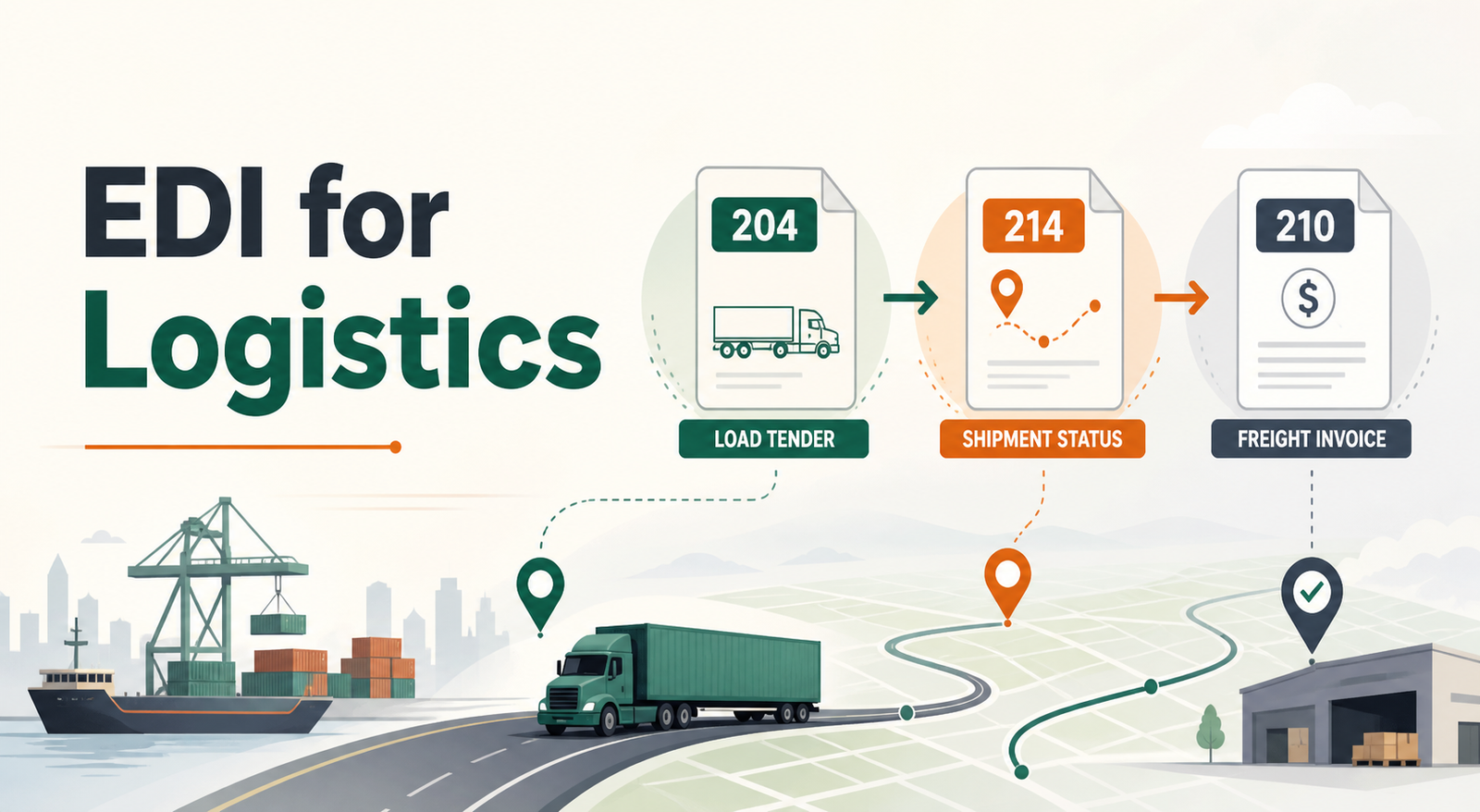
EDI for Logistics: How 204, 214, and 210 Work Together
- DataSync
- 30 Aug, 2026
- 02 Mins read
- Edi
In logistics workflows, EDI 204, EDI 214, and EDI 210 often work together to move a shipment from load tender to status visibility to final billing. For carriers, brokers, shippers, and operations teams, these three documents are some of the most important transactions in transportation EDI.
If you are trying to understand EDI for logistics, this is the basic flow that matters most.
What Is EDI 204?
The EDI 204 Motor Carrier Load Tender is used by a shipper or broker to offer a load to a carrier.
It usually includes:
- Pickup and delivery locations
- Shipment dates
- Equipment requirements
- Reference numbers
- Load details and instructions
For operations teams, the 204 is the document that starts the transportation workflow. It tells the carrier what needs to be moved and under what conditions.
What Is EDI 214?
The EDI 214 Transportation Carrier Shipment Status Message is used to send shipment updates after the load is accepted and in motion.
This can include updates such as:
- Picked up
- In transit
- Delayed
- Arrived
- Delivered
The 214 is important because it gives shippers, brokers, and customer service teams visibility into where a shipment stands without relying on manual calls or emails.
What Is EDI 210?
The EDI 210 Motor Carrier Freight Details and Invoice is the carrier invoice sent after freight movement is completed.
It typically includes:
- Shipment references
- Charges
- Accessorial fees
- Invoice totals
- Billing-related details
For finance and transportation teams, the 210 connects delivery activity to freight payment.
How 204, 214, and 210 Work Together
In a common logistics flow, these EDI transactions usually appear in this order:
- A shipper or broker sends an EDI 204 load tender
- The carrier sends EDI 214 shipment status updates
- After delivery, the carrier sends an EDI 210 freight invoice
This sequence gives teams visibility across planning, execution, and billing.
Why This Flow Matters
When one of these documents is late, missing, or inaccurate, logistics teams can run into:
- Shipment visibility gaps
- Customer update delays
- Disputes over delivery timing
- Freight invoice mismatches
- More manual follow-up with carriers
That is why strong logistics EDI is not only about sending files. It is about keeping transportation operations, status updates, and freight billing aligned.
Final Takeaway
If you want to understand EDI 204, 214, and 210, think of them as the core transportation flow: tender the load, track the shipment, and invoice the move.
For logistics teams, that flow improves coordination, reduces manual work, and creates better shipment and billing visibility across trading partner operations.
Our Team Members