EDI 270 and 271 Explained: Automating Healthcare Eligibility Verification
- DataSync
- 15 Oct, 2026
- 03 Mins read
- Edi
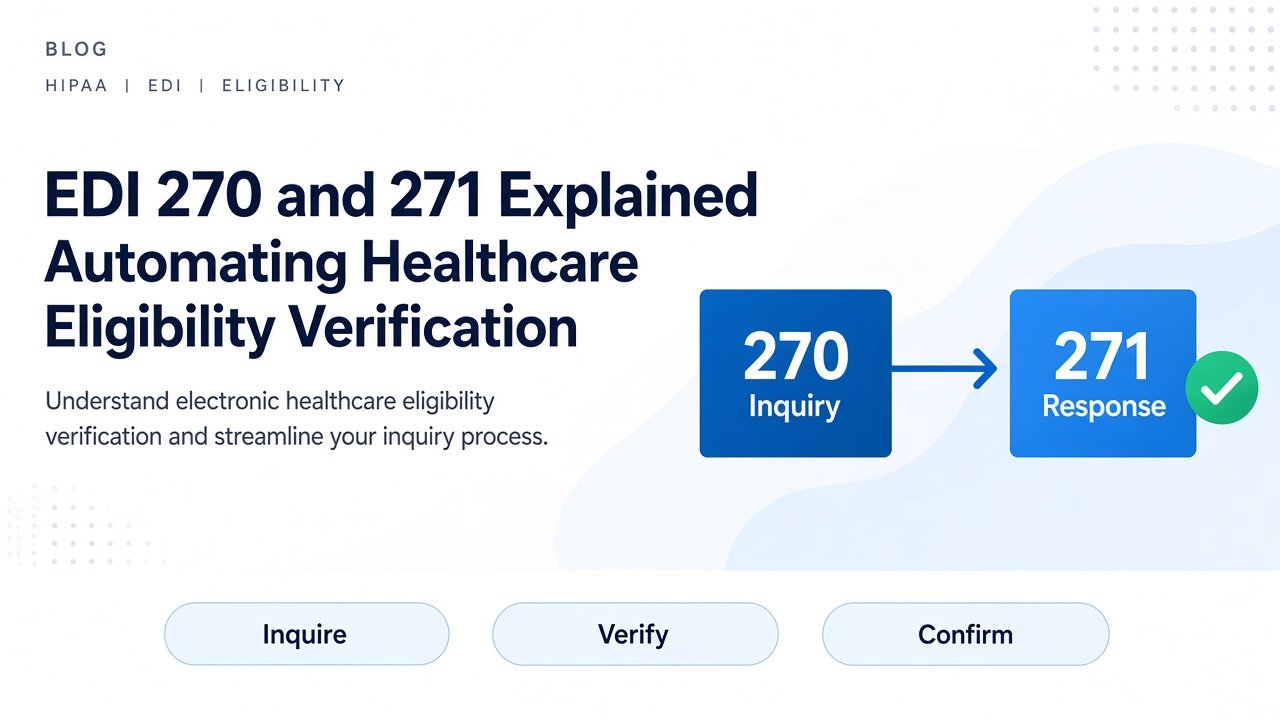
EDI 270 and 271 are the HIPAA transactions used to automate healthcare eligibility verification. The 270 asks whether a member has coverage and benefits. The 271 returns the payer’s response so providers can confirm eligibility before services and billing move forward.
For front-office, billing, and EDI teams, these transactions reduce denied claims caused by inactive coverage or unclear benefits.
What EDI 270 Does
The 270 Eligibility, Coverage, or Benefit Inquiry is the request transaction.
Providers use it to ask a payer about:
- Active coverage status
- Plan or product information
- Benefit details
- Service-specific eligibility
- Coverage for a given date of service
In short, the 270 is how eligibility questions are asked electronically instead of by phone or portal alone.
What EDI 271 Does
The 271 Eligibility, Coverage, or Benefit Information is the response transaction.
It returns the payer’s answer so teams can see whether the member is covered and what benefit information is available for the inquiry.
A clean 271 helps staff decide whether to proceed, collect additional information, or address coverage issues before claim submission.
How Automated Eligibility Verification Works
A typical 270/271 flow looks like this:
- Patient or member data is captured in the scheduling, EHR, or billing system.
- A 270 inquiry is generated and sent to the payer or clearinghouse.
- The payer returns a 271 response.
- Staff or automated workflows use the response to confirm coverage.
- Care and claim processes continue with fewer eligibility surprises.
Automation matters because eligibility checks happen at high volume and need fast turnaround.
Why 270 and 271 Matter Before Claims
Eligibility verification is one of the earliest control points in the revenue cycle.
When 270/271 exchange works well, organizations can:
- Catch inactive coverage earlier
- Reduce avoidable claim rejects and denials
- Improve patient estimates and responsibility discussions
- Lower call-center and portal workload
- Give billing teams cleaner claim starts
When it fails, problems often appear later as rejected claims, delayed payments, or rework.
Common Eligibility Verification Challenges
Even with standard transactions, eligibility programs can break down.
Common issues include:
- Incomplete subscriber or member identifiers
- Payer-specific companion guide differences
- Slow or incomplete 271 responses
- Unclear benefit interpretation for staff
- Weak logging between inquiry and response
These gaps turn an automated check back into a manual investigation.
Best Practices for 270/271 Programs
Strong eligibility verification programs usually include:
- Accurate patient and subscriber master data
- Clear mapping for required inquiry fields
- Monitoring of response times and failure rates
- Exception queues for unmatched or incomplete responses
- Training so staff know how to act on 271 results
The transaction pair only creates value when the response is usable in real operations.
Final Takeaway
EDI 270 and 271 automate healthcare eligibility verification by exchanging coverage inquiries and responses electronically. Together, they help providers confirm benefits earlier, reduce avoidable claim problems, and keep front-end revenue cycle processes moving with less manual effort.
Teams that monitor and operationalize 270/271 exchange turn eligibility checking into a reliable system, not a last-minute phone call.
Our Team Members