EDI 180 Return Merchandise Authorization: Automating Product Return Requests
- DataSync
- 19 Nov, 2026
- 03 Mins read
- Edi
EDI 180 Return Merchandise Authorization helps partners exchange structured information about merchandise returns. It can reduce repeated email entry and make return requests easier to connect with the products, references, and decisions involved.
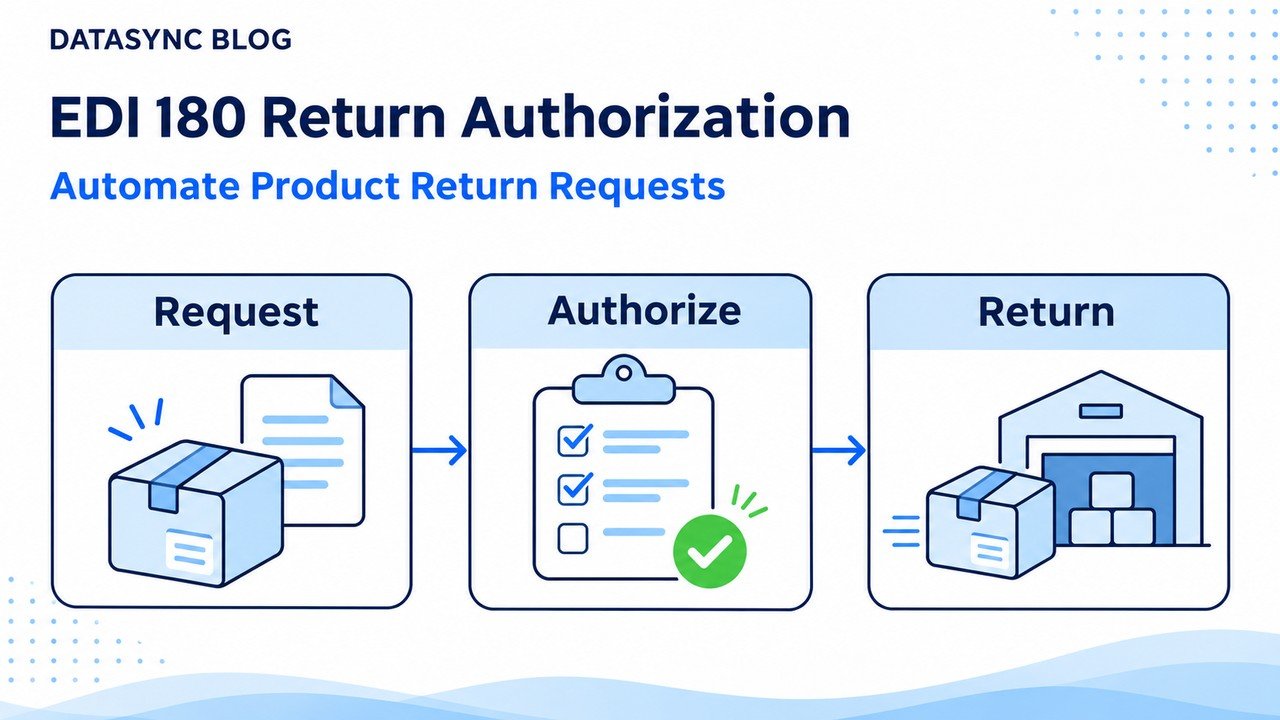
Automation works best when the business distinguishes a request from an authorization and from the physical return itself.
What Counts as an EDI 180 Exchange
The full X12 name is Return Merchandise Authorization and Notification. Its scope includes requests, authorization or disposition, and return notifications. A partner may implement only part of that scope; the X12 180 reference describes the available purposes.
A return process should agree on:
- The purpose of each exchanged message
- Original order, invoice, or return references
- Product identifiers and requested quantities
- Units of measure and relevant dates
- Return reasons and permitted disposition values
- Authorization, warehouse, and credit responsibilities
Use the partner’s chosen guide to determine which references and codes are required. A general transaction description cannot replace those implementation rules.
Three Stages to Keep Separate
Return Request
The requesting partner identifies the merchandise and explains why a return is needed. Validate the business references, product, and requested quantity before routing the request for a decision. Receiving the request should not silently mark it approved.
Authorization and Disposition
The responding process communicates the agreed authorization or handling decision. Preserve line-level differences when supported: some merchandise may be accepted while other lines need review. Apply the partner’s instructions for return destination and handling rather than inventing a default.
Return Notification and Follow-Through
A notification can communicate return activity within the agreed workflow. Physical receipt, inspection, and any financial credit still need their own recorded outcomes. Keep those outcomes linked to the return case so operations can distinguish approval from completion.
Signals Manual Return Handling Is Causing Problems
Consider structured integration when:
- Teams rekey the same request into several systems
- Warehouses receive merchandise without a recognizable return case
- Approved quantities differ from the products that arrive
- Return reasons are lost in free-text email threads
- Customers cannot obtain a consistent status
- Finance cannot reconcile the return to the original sale
An EDI exchange will not resolve unclear approval policy by itself. Define who decides and what evidence completes each stage.
How to Automate Return Requests Safely
Build the workflow around explicit business states:
- Validate the incoming message against the partner guide
- Link the request to the relevant original references
- Check item identity, unit, quantity, and return reason
- Route the request through the agreed authorization process
- Communicate the decision and retain the return instructions
- Reconcile arrival, inspection, and financial outcomes with the return case
For example, a request for ten units could be authorized for eight. The warehouse and finance team should see the approved quantity and the received quantity separately, with a visible exception if they differ.
What Reliable Return Integration Should Mean
The implementation should include:
- A shared return reference across participating systems
- Clear request, authorized, received, and closed statuses
- Owned mappings for return reasons and dispositions
- Duplicate checks that recognize repeated business requests
- Exceptions for missing references or quantity differences
- An audit history of decisions and later adjustments
A functional acknowledgment can confirm technical processing without granting return approval. Customer-facing status should reflect the actual business decision and subsequent handling.
A Simple Return Automation Test
Ask four questions about a recent return:
- Can we distinguish the request from the authorization?
- Can we trace each returned item to its business references?
- Can the warehouse identify the approved handling instructions?
- Can finance see the difference between authorized, received, and credited quantities?
An unclear answer identifies where integration or process ownership needs improvement.
Final Takeaway
EDI 180 supports a structured return conversation, including requests, authorization, and notifications. Its business value comes from connecting that conversation to warehouse and financial outcomes.
Keep each stage explicit so faster message exchange also produces clearer return handling.
Our Team Members