EDI Message Flow Explained: From Trading Partner to MDN and 997
- DataSync
- 29 Aug, 2026
- 02 Mins read
- Edi
A complete EDI message flow involves much more than sending a file from one company to another. It includes secure transfer, validation, routing, processing, and acknowledgment.
What Is an EDI Message Flow?
An EDI message flow is the path a business document follows from the sending system to the receiving system and back through acknowledgments.
This flow commonly applies to transactions such as 850 purchase orders, 810 invoices, 856 advance ship notices, and 997 acknowledgments.
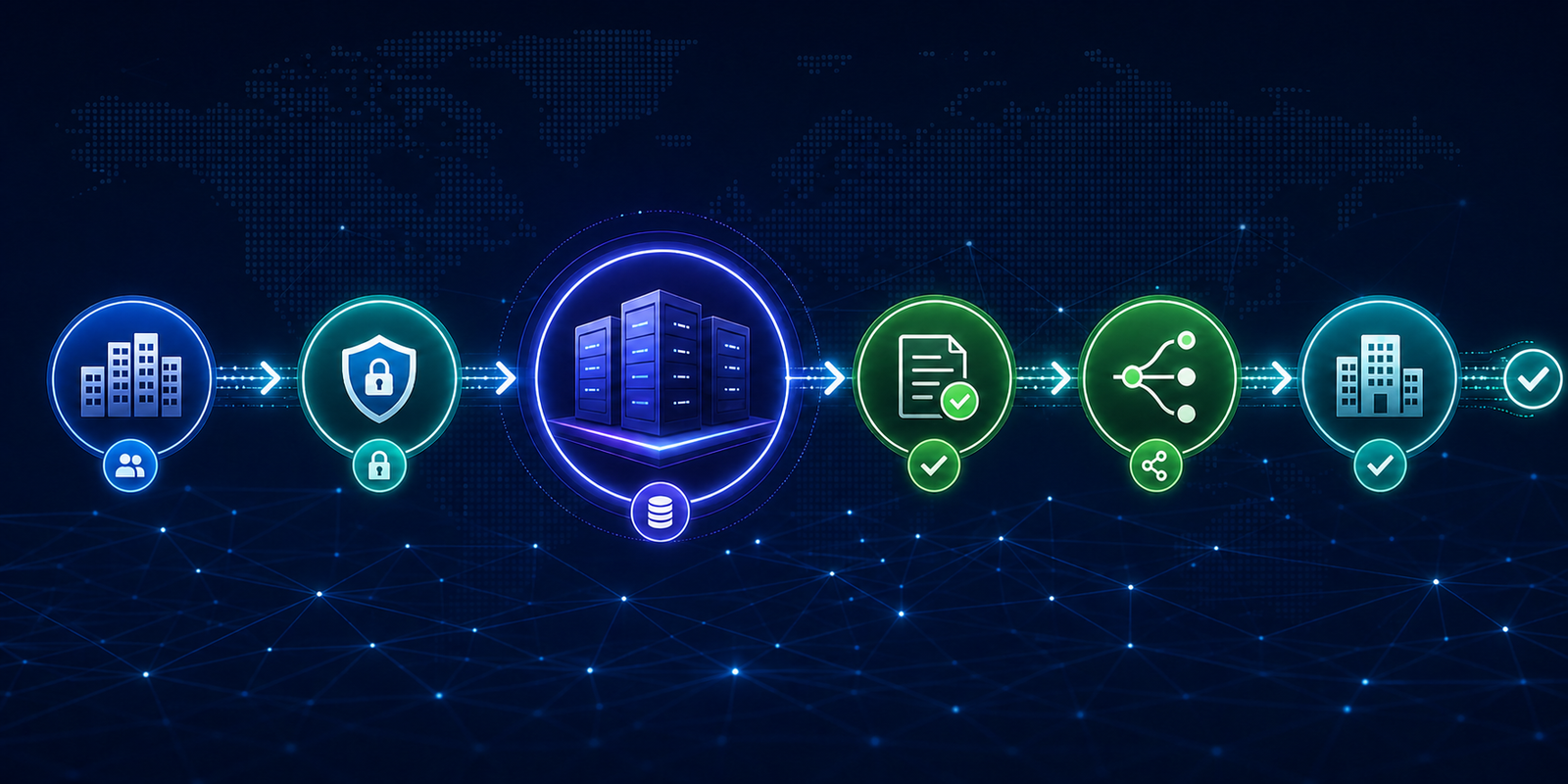
Typical EDI Flow Steps
Most enterprise EDI workflows follow a sequence like this:
- A business application creates a document
- The document is transformed into EDI format
- The file is sent through AS2, SFTP, or another channel
- The receiving EDI system identifies the trading partner
- The document is validated and parsed
- The data is transformed into an internal format
- The transaction is routed to the correct system or workflow
- Acknowledgments are generated where required
The process usually starts in an ERP, order system, warehouse platform, or finance application. That business data is converted into ANSI X12 or another EDI format and sent through a secure channel such as AS2 or SFTP.
When the receiving platform gets the message, it identifies the correct trading partner, validates the document, parses the data, and routes it to the right business workflow.
At the end of the flow, acknowledgments provide visibility into what happened after the document was sent.
Common acknowledgment types include:
- MDN for AS2 transport confirmation
- 997 for X12 structural confirmation
These acknowledgments are critical for monitoring and partner support.
Why Message Flow Visibility Matters
Without visibility into the full EDI flow, businesses may struggle with missing transactions, delayed processing, duplicate documents, partner-side failures, and acknowledgment issues.
A reliable EDI platform should provide tracking across every stage of the message lifecycle, along with validation, error handling, retries, monitoring, and audit logs.
Conclusion
When businesses understand and control each of these steps, they can build more secure, scalable, and dependable EDI operations.
Our Team Members